Law of Attraction Secrets

🌟 Ready to Attract Your Dream Life?
👉 Discover the Law of Attraction technique that’s transforming lives worldwide.

✨ Start Manifesting with the Law of Attraction Now »

Tuesday, July 13, 2021

Sound Healing: The Benefits of Healing Frequencies & Music

Most of us have a natural sense of the power of sound and sound healing. Perhaps you know a song that always cheers you up, or you've found it impossible to concentrate when hearing the noise of a certain frequency.

What's less well known is that sound can actively heal and help you. But where should you start if you want to learn how to use sound therapy in your own life?

In this article, we'll first help you get a grip on what sound healing actually involves before we consider three distinct types of sound healing therapy.

From there, we'll look at five of the most powerful instruments you can use for sound therapy – some of which you may already have in your possession.

Finally, we'll look at exciting new ideas about the interplay between sound healing and hypnosis – both of which can harness your subconscious to help you build a happier, more successful life.

What Is Sound Healing
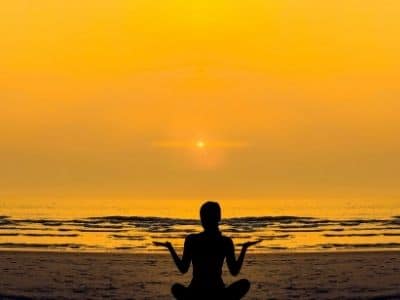
What Is Sound HealingSo, what exactly is sound healing? Sometimes called music therapy, this alternative approach to well-being encompasses any practice during which music is used to boost any aspect of health.

This can involve improvising along to music, singing, simply listening, chanting, or reciting rhythmic prayers against a background of music. In some cases, sound healing practitioners even design specific soundtracks intended to influence brainwaves to boost positivity or focus.

Depending on the form of sound therapy used, sound healing benefits include impacts on social development, emotional trauma, cognitive function, and mood.

For example, one study in a top nursing journal in 2006 found that people experience less pain and anxiety after music therapy, while there is increasingly promising research into ways in which music therapy might address post-traumatic stress disorder, reduce insomnia, and even enhance immune function.

But why does this healing practice have such potent effects? To understand this, we need to consider the power of frequencies and vibrations.

Sound Healing Frequencies And Vibrations

Sound Healing Frequencies And VibrationsA key aspect of music therapy is sound healing frequencies.

We're not healed by just any music or sound, after all – all healing frequencies on any practitioner's healing frequencies list have a particular resonance that floods our brain with feel-good hormones like dopamine and oxytocin.

In addition, those who work with the Law of Attraction highlight that we all constantly vibrate on particular frequencies that influence what we manifest in our own lives.

In other words, the people and events we draw toward us.

With music therapy, our vibrational frequency can be heightened, improving our inner lives and the positivity we radiate.

Types Of Sound Healing Therapy

With the groundwork on the basics of sound therapy now laid, let's now turn to some examples of the most effective sound healing methods.

Then, we'll think about which instruments (including your own voice) can be used to practice these techniques at home or with an expert practitioner.

Sound Healing Meditation
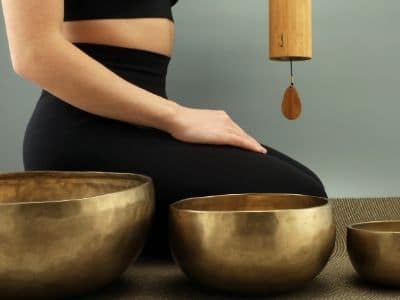
Sound Healing MeditationSound healing meditation combines the impact of music with that of mindfulness or meditation.

Crucially, instead of meditating in a silent space, you meditate to a particular sound.

This could be a song of your choosing, a specially designed track to tune your brain waves to a particular frequency, or even sounds from nature that connect you with feelings of calmness and peace.

In time, sound healing meditation can train you to respond with the desired feeling without even having to meditate.

For example, if you're an anxious speaker about to give a presentation, you can simply turn on the sound and immediately feel centered and positive.

Neurological Music Therapy

Neurological music therapy focuses on a batch of training techniques that aim to enhance cognitive function.

These techniques were developed through rigorous research and testing and with a comprehensive knowledge of how music and sound impact the brain's speech, language, and processing centers.

While anyone can in principle benefit from neurological music therapy, it's thought to be especially useful for those whose cognitive function has been damaged in some way, such as those who have suffered from strokes, traumatic brain injuries, and degenerative neurological diseases.

It is proven to speed up rehabilitation, helping to improve cognitive functioning and support maximal independence.

Binaural Beats

Thirdly, binaural beats frequency tracks involve hearing two different tones (one in each ear).

Depending on the speed and frequency of the tones, they can help you get into a different state of mind.

Sometimes advertised as “brainwave entrainment”, binaural beats can be at one of five frequencies, doing everything from supporting dreamless sleep (the delta frequency pattern) to enhancing creativity (the theta pattern) or keeping you alert for long periods (the gamma pattern).

If this sounds good to you, click here to learn more and discover how you can benefit from binaural beats in your own life.

Sound Healing Instruments

You now have a sense of the broad scope of sound therapy, but you might be wondering what instruments work for music therapy.

Happily, it's easy to get hold of sound therapy recordings.

However, if you're just curious about the process or even wonder whether you might want to do so at home, here are five healing instruments.

Sound Healing Singing Bowls

If you haven't heard of a singing bowl, the two most common types are the Himalayan singing bowl and the crystal singing bowl.

The former are metal bowls made of forged alloys, which you can hammer by hand or with a striking rod.

They make a warm, rhythmic, and gentle sound that can help with focus and induce a sense of calm with peace of mind.

Most frequently, they're used to help people enter and sustain a meditative state.

However, some practitioners also believe that different singing bowl tones can heal different chakras – powerful energy centers throughout the body.

Sound Healing Tuning Forks

Tuning fork therapy uses calibrated metal forks to produce a range of tones that are meant to influence different areas of your body.

They are often used to help with mood swings, and they are said to induce emotional balance.

In addition, sound therapy tuning forks are good for releasing mental and emotional tension.

They are inexpensive and can be handy tools to learn to use at home for busting stress.

Sound Healing Gong

The GreaterMinds GongAn ancient instrument from Bronze Age China, the gong has undeniable healing power.

Indeed, here at GreaterMinds, our logo is within a gong – a symbol of mental, emotional, and physical balance.

Gong bath sessions famously make people feel as though they have had a wonderful night's sleep.

The sound resonates all throughout the body in waves, and this can help with everything from chronic pain to work stress, restlessness, and generalized anxiety.

Sound Healing Drums

As opposed to the steel drums and loud drum kits you'd normally encounter, sound healing drums (sometimes called Indian drums) produce a light, calming sound.

These relaxing drums can put you into a meditative state so deep that it is similar to a hypnotic trance, during which your subconscious mind becomes open to healing suggestions.

Research shows that when you're in this trance state, any physical pain dulls and your brain goes into a resilience-boosting rest state.

Sound Healing Voice

Finally, think back to the wonderful experience of a loved one singing a lullaby to you when you were a child.

This showcases the calming abilities of the human voice, which never loses its power.

You don't need to be a trained singer to do voice healing therapy – anyone can learn to hum at the right pitch to unwind, or to energize your mind.

These techniques are particularly good at refocusing you when you get distracted.

Increase Your Vibrational Frequency Using Self-Hypnosis

Sound healing therapy is undeniably powerful. It's a versatile, easily learned approach to fine-tuning your mind and body, helping you feel the way you want to feel.

However, it's not the only way to influence your brainwaves and inner vibrational frequency, and it can be complemented by other methods.

One of the most powerful is self-hypnosis – a way of accessing and transforming your conscious mind through suggestion.

During hypnosis, you become deeply relaxed, and you can then be led through a process of abandoning old beliefs and feelings that no longer serve you.

No matter what you want to change, whether it's work performance or self-confidence, self-hypnosis can align your frequency with your dream future.

To that end, our Positive Attitude self-hypnosis program aims to get you into the best mental state of your life, supporting you in seeing the best in every opportunity as well as in yourself.

Increase Your Vibrational Frequency Using Self-Hypnosis

The post Sound Healing: The Benefits of Healing Frequencies & Music appeared first on The Law Of Attraction.


* This article was originally published here

Getting Back to Basics with Your Pineal Gland!


All this talk about Covid stopped us from listening to our Pineal Gland. If you stop and think, you know automatically when something is wrong with your body. If we can get rid of the fear, we allow our own intuition to take over allowing miracles (and knowledge) to occur. So today, we are getting back to basics by understanding our body and doing things now that are good for us... such as baking soda, raising our PH levels, good quality LIVE water by allowing the messages from our intuition and from the Universe to come forward. Afterall, we attract our health to us. This is the Law of Attraction.

* This article was originally published here

Sunday, July 11, 2021

Using Self-Determination Theory To Boost Manifestations

No matter who you are and what you want in life, you'll be aware that it's important to take control of your own destiny.

Luck and fate always influence the road you take, but to reach the greatest levels of success you need to learn how to sit comfortably in your own power.

Self-determination theory helps to explain what you need in order to be able to do this. But what is this theory, and how can you put it to use?

We'll begin with a thorough exploration of what self-determination theory actually is, explaining its history and unpacking the key terms.

Next, we'll introduce you to processes and techniques that can help you build self-determination in your own life, focusing on three major changes you can make to create a better life.

Finally, we'll close by asking how self-determination theory can also improve your Law of Attraction work, helping you manifest more effectively than ever before.

What Is Self-Determination Theory?

What Is Self Determination Theory?So, what is self-determination theory (SDT)? To begin, we need to define determination in this context. Essentially, determine where you're going in life, and the goals you pursue.

According to self-determination theory, we are all motivated to develop as people when we meet a set of 3 complimentary psychological needs – a connection between others and self, autonomy, and competence.

According to SDT, when our innate needs are met, we begin to take proper control of our lives, deliberately shaping our futures rather than seeing ourselves as victims of circumstance.

Crucially, SDT teaches that we do better when we move past external regulation – this is the drive to do things for a reward like love, approval, or acclaim Instead, we need to find our way to intrinsic motivation, where we learn to enjoy things in themselves.

These, however, are just the bare bones of the theory. To understand more, we need to explore the history of SDT.

The History of SDT

The History of SDTThe history of SDT began in the 1970s when psychologists began to understand the importance of drawing energy from our own desires and values (intrinsic motivation) as opposed to focusing on external improvements.

The crucial point in this research arrived around 1985 when Edward L. Deci and Richard Ryan published a monograph introducing the basics of SDT to the world. Since then, it has played a key role in both social psychology and educational theory.

Along with emphasizing the importance of intrinsic motivation, SDT has illuminated another major fact – that behavioral change is primarily driven by a need for growth.

In other words, we need to become actively invested in our own growth (which involves meeting challenges and moving out of our comfort zone) if we're going to create the life we want.

And, as noted above, we need three basic needs met if we're to be able to embrace growth:

  • Competence: We need to prove to ourselves that we can learn and master skills.
  • Connection or Relatedness: We need to feel bonded with others, and experience some sense of community.
  • Autonomy: We need to feel that what happens to us is up to us.

Only once we have these three things will we be able to live a self-directed life.

The Psychology of Self-Determination Theory

The Psychology of Self Determination TheoryHow does the psychology of self-determination theory work in practice, then? Consider the following example. Imagine that you're leading a group project at work, and you fail to finish it on time.

If you're low in self-determination (because your three core needs have not been met), you will look outside of yourself for someone or something to blame.

Perhaps you'll adopt a victim stance, according to which you just “couldn't” get the work done, or maybe you'll blame someone else on the team.

Either way, you won't act to fix what went wrong, attempt to rebuild your reputation, or look inward to see what could be done differently next time.

In a nutshell, it's painful to take any ownership of what happened, so you'll defend yourself to the hilt.

In contrast, if you have high levels of self-determination, you will own up to where you made mistakes, while also acknowledging the role that other people or circumstances beyond your role may have played.

With the facts identified, motivation to make up for the failure will take over, and you’ll quickly recover. Those who react like this tend to have happier, more successful experiences, better relationships, and a stable internal source of self-esteem.

However, it's vital to note that your three core needs must be continuously met – otherwise, you too will run out of reserves of self-determination. So, whether you're low or high in self-determination, the tips below can help you make the best of your life.

How To Improve Self-Determination

How To Improve Self DeterminationNow that you understand what self-determination prescribes and have seen some self-determination examples, you may be excited to learn more.

However, if you're not yet motivated to pursue self-determination, it's worth noting that studies show it can improve your life in many key areas.

At work, self-determination gets you promoted more quickly, and helps you build good alliances with others. In competitive settings, self-determination pushes you to excel and allows you to thrive in the mastery of your skills.

Meanwhile, in your social life, self-determination pushes you to sustain a healthy community of people who genuinely add positivity to your life.

And there is even research suggesting that high levels of self-determination are correlated with better adherence to a diet and exercise regime!

Here, then, are three powerful strategies you can use to keep your self-determination high at all times.

You'll notice the most significant improvements if you try to apply all of these at the same time, but even just focusing on any one strategy should lift your mood and begin to open your mind to new opportunities.

Building Self-Motivation

Building Self-MotivationFirstly, you want to start improving self-motivation skills – learning how to draw from an intrinsic source of motivation rather than relying on others for approval.

This integrated motivation will then keep you moving even when life becomes challenging.

SDT theory teaches that daily goals help with this.

In your first week, these goals can be very simple.

You could include things like tidying your desk or making a call to the doctor.

In the next week, try to add one more challenging goal every day.

An example of a challenge would be, speaking first in a meeting, or approaching someone about a new work opportunity.

Keep challenging yourself more, week by week.

Take Control Of Your Life

Secondly, you will benefit from increasing awareness of your own power to positively influence life's outcomes.

One way in which you can do this effectively is to look back at your own history and challenge yourself to see where you have been in control of major positive changes.

Can you think of 5-10 times where it was your drive, responsibility, and intuition that made something happen?

You can include anything on the list, from being the first person to ask another out on a date to coming up with an out-of-the-box solution at work or ending a relationship that wasn't serving your needs.

Take Responsibility For Your Life

Thirdly, remember that it is up to you to make your life a success and to tackle the roadblocks that arise – this can be empowering in time, rather than scary.

The goal-setting exercise helps here, boosting your confidence as you become more intrinsically motivated.

However, you can go even further by keeping a journal in which you practice taking responsibility for each day.

In each entry, think of one good thing that happened through your will and behavior, and what made it work out.

Next to that, write one thing that didn't work out so well, and what you'd do differently.

The goal of self-determination psychology is growth, not self-recrimination.

How Can Self-Determination Theory Help With Manifesting

How Can Self-Determination Theory Help With ManifestingYou've now learned all the basics of self-determination theory (SDT), including uncovering the basic needs that must be met for you to thrive as a person.

You've also seen some concrete steps you can take to boost self-determination in your daily life. Now that you've got all of this under your belt, you can move on to complementary theories that help you to improve your confidence and success even more.

The Law of Attraction is an ideal partner for self-determination theory. According to the Law of Attraction, like attracts like, so if you work on taking control then the universe will give you more opportunities to do so.

In contrast, if you revert to a victim mentality, you'll attract negativity and find yourself feeling continuously smaller.

Happily, Law of Attraction practitioners has created a wide range of tool kits and techniques that boost your self-determination and improve your ability to attract the things you really want into your life.

This is called using manifestation power, and those who become good at it swear that it can transform lives. As a bonus, the most powerful techniques are also easy and intuitive.

For example, one exercise – creative visualization – helps you build a vivid image of your desires, concentrating your energy on turning them into reality.

You can think of this as a kind of super-powered meditation exercise, with tangible results on the direction of your life.

Meanwhile, others focus on affirmations – positive, focused statements that you say to yourself in order to change the way you see your worth and the world around you.

However, this is just a snapshot of what the Law of Attraction can do for you.

If you want to become happier, stronger, and more creative than ever before, reading more about manifesting is the perfect place to start.

The post Using Self-Determination Theory To Boost Manifestations appeared first on The Law Of Attraction.


* This article was originally published here

Vibration Leap Reviews - Legit Program That Works or... - Islands' Weekly

Vibration Leap Reviews - Legit Program That Works or...  Islands' Weekly

* This article was originally published here

Friday, July 9, 2021

Chaldean Numerology Alphabet Values & What Do They Mean?

Perhaps you've known people who have used the numerology alphabet values to better understand themselves, predict their future, and plan their successes.

If so, you've likely wondered how you might be able to incorporate this tool into your own life.

However, it can look incredibly complex, and there are so many different types of numerology that you may not know where to start.

In this article, we'll help you understand the basics of the numerology alphabet, with a focus on the power of Chaldean Numerology.

We'll start with a brief primer on the numerology alphabet – what it is, and how we derive the numerology of names.

Next, we'll work our way through the meaning of alphabet numbers before digging into the specifics of the Chaldean Numerology alphabet and what each letter means.

Finally, we'll contrast the good alphabet numbers with the bad alphabet numbers and help you understand how you can use both to learn more about yourself.

What Is The Numerology Alphabet

Perhaps you've seen online numerology calculators and have wondered what actually happens when you put your name into them.

How is the result calculated, and what can alphabet numerology really tell you about yourself?

As it turns out, there's a specific process you need to use if you want to get the right information about your name and traits.

With this in mind, let's look at how you make accurate calculations using the numerology alphabet, and then explore an overview of what specific numbers mean.

The Numerology Of Names

The Numerology Of NamesTo figure out your name numerology number by using the number chart relevant to Chaldean numerology.

You use a list of numbers to discover the value associated with each letter.

Then you add all the relevant numbers together to find your numerology name meaning.

The number correlations are as follows (and note that unlike other forms of numerology, 9 is not included):

A, I, J, Q, Y = 1
B, K, R = 2
C, G, L, S = 3
D, M, T = 4
E, H, N, X = 5
U, V, W = 6
O, Z = 7
F, P = 8

So, for example, if your name is Ted, name numerology tells you to add 4 + 5 + 4 to get a total of 13.

If your number is over 8 and isn’t the special numbers of 11 and 22, you then add the two digits of the number together to get a smaller, final number (in this case, 4).

The Meaning Of Alphabet Numbers

The Meaning Of Alphabet NumbersAll forms of numerology teach that the meaning of numbers reveals both good and bad aspects of your character.
This is useful in helping you understand how to maximize your strengths and work on your weaknesses.

The below list captures at least some of the key meanings associated with each number.

1: Bravery and ingenuity; self-absorption and over-confident.

2: Empathy and a balanced perspective; easy offense and self-doubt.

3: Artistry and out-of-the-box thinking; melancholy and carelessness.

4: Pragmatism and logic; attraction to conflict and coldness.

5: Spontaneity and playfulness; over-commitment and avoidance.

6: Commitment and compassion; anxiety and a need for approval.

7: Deep spirituality and understanding; arrogance and apathy.

8: Insight and rationality; shallowness and desire to please others.

9: Kindness and empathy; fluctuating moods and scatterbrainedness.

11: Creativity and accurate predictions; social anxiety and a lack of practicality.

22: Leadership and responsibility; ambivalence and over-use of power.

How Is Chaldean Numerology Related To The Alphabet?

How Is Chaldean Numerology Related To The Alphabet?Of all types of numerology, Chaldean Numerology is probably the least well-known. In spite of this, however, it can provide powerful and unusually accurate insights into who you are and what you need.

Some consider it to be the mother of all numerology practices, though it's difficult to prove which system was derived precisely when.

Those who practice it believe that we all have an innate destiny and that uncovering facts about that destiny can help us live in accordance with our true purpose. You can use it to calculate information about your truest, most authentic self as well.

It is an especially helpful method to reach for when you want to know what's going on within your subconscious and how others are influencing your success as well.

The catch is that it involves a more complex toolkit that is perhaps less intuitive than other approaches to numerology.

Shortly, we'll turn to the simplest ways to apply the Chaldean methodology to your name, looking at both the ‘good’ and ‘bad’ aspects of each relevant number.

First, however, it's helpful to dig a little deeper into the origins of this approach to numerology and to understand what those who pioneered it believed.

The History Of Chaldean Numerology

The History Of Chaldean NumerologyChaldeans hailed from Chaldea in the Middle East – what we would now call southern Iraq – from 625 to 539 BC.

As noted above, Chaldeans held a commitment to the idea of us having a true, immutable self. In addition, Chaldean history also involved unique spiritual commitments.

Chaldean people prayed to one Supreme God and a hierarchy of archangels and subordinate angels. Chaldeans derived their numerology system from analysis of how planets moved and appeared to impact personality and destiny.

The core underlying principle of Chaldean Numerology is that all letters from 1-8 carry specific vibrational energy. Unlike in standard astrology, 9 is not included due to its status as a sacred number.

After its inception, Chaldean Numerology traveled to ancient India and Greece.

Now, Chaldean Numerology is enjoying a renaissance, and you can use it in combination with other forms of numerology to learn the most about yourself, your unique talents, and the blocks you need to overcome.

The Good Meanings of Alphabet Numbers

Chaldean numerology matches numbers to letters in the same way we listed near the start of this guide.

However, Chaldean number theory arguably provides a deeper sense of the ‘good and bad' meanings of all numbers.

To see this, let's take the name Eliot.

This works out as E=5 + L=3 + I=1 + O=7 + T=4 = 20.

The name total of 20 reduces to the name total of 2.

Chaldean alphabet numerology highlights the favorable aspects of this number, suggesting that Eliot is an intuitive, insightful person who is a natural mediator, able to see both sides of all disputes.

This suggests a potential attraction to counseling or professions in the justice system.

The Bad Meanings of Alphabet Numbers

Chaldean numerology of names is based on the fundamental principle that all numbers carry a positive and negative charge.

So, to use another example, let's see what the numerology alphabet tells us about someone with the name Alice.

This would give us the calculation A=1, L=3, I=1, C=3, E=5, which results in the number 13.

We then add 3+1 to get Alice's core Chaldean number of 4.

The dark side of 4 is all about aggressiveness, impatience, and emotional removal, which tells us that Alice will benefit from working on empathy and careful listening in relationships if she is to be successful and fulfilled.

Find Out More About The Different Types Of Numerology

As we've suggested throughout, different types of numerology all provide us with subtly different ways of understanding our fundamental nature and the challenges we face.

Here, we've focused on what we can learn by applying Chaldean numerology, which emphasizes that there is a dark and a light side to every number.

However, all other forms of numerology have their strengths as well, so they're all worth exploring. For example, Pythagorean numerology focuses on calculating your destiny, helping you to understand your real purpose in life.

Meanwhile, Kabbalah numerology is a simple approach to name numerology that is famously helping if you're trying to understand how your insecurities and defenses might be holding you back.

Further types include Vedic numerology, which gives particular attention to how the year of your birth shapes your opportunities you'll have – and how to make the best of those opportunities.

The post Chaldean Numerology Alphabet Values & What Do They Mean? appeared first on The Law Of Attraction.


* This article was originally published here

Thursday, July 8, 2021

Self-Healing: Do We Have Natural Self-Healing Superpowers?

We all have a sense of how the body and mind affect each other.

For example, heartbreak can leave us with physical aches, and long-term low mood leaves us more vulnerable to illness.

However, we might also have innate self-healing superpowers that we can tap into in order to improve well-being.

Below, we'll look at how to develop this superpower. First, we'll unpack the basic idea of spiritual self-healing and how it works.

Then, we'll turn to four concrete things that you can do to facilitate self-healing in your own life.

We'll show you how to do all of these things effectively, using examples that help you to see when each technique is especially relevant.

Finally, we'll explore how practicing mindfulness can enrich your life.

What Is Spiritual Self-Healing

What Is Spiritual Self-HealingWe already know how our bodies orchestrate physical healing, activating our immune systems or knitting our damaged tissue together after a cut.

Spiritual healing is not as complex as you might think. It simply refers to how we use our minds to encourage recovery.

This might be recovery from physical injuries or illnesses, or it might be recovery from poor mental health.

In either case, we can harness and direct energy toward a goal of healing.

As a result of focus, we can start to see a physical and emotional transformation.

Healing The Body With The Mind

Healing The Body With The MindThe power of the mind is enormous. As noted above, our minds respond to what's happening to our bodies, and our bodily sensations change in accordance with what's happening in our minds.

To get a sense of how spiritual healing can work, just think about how you can use physical coping strategies to reduce stress and anxiety.

For example, you might deliberately slow your breathing to get yourself out of a panicked state.

Similarly, you can use your mind to boost your physical well-being.

While positive thinking must be paired with direct action and proper healthcare, it can nevertheless be the key to a healthier body.

How To Use Self-Healing With The Power Of The Mind

With the above in mind, let's now look at specific ways of healing yourself with your mind.

You can practice any of the following techniques at any time and with any healing goal in mind, but you will likely get the most from these suggestions if you try to make a habit of using more than one.

All these techniques cannot only help you to heal from physical and emotional distress, but they can also help to boost your resilience to future pain.

Using The Law Of Attraction Mindset For Self-Healing

Using The Law Of Attraction Mindset For Self-HealingThe Law of Attraction teaches us that by focusing on something we want, we have the power to manifest it in reality.

Your belief system, then, has a direct impact on what happens in your life – as well as how you feel. If you want to practice spiritual healing, try to expect that everything you're doing will help you feel better.

For example, you might have a daily affirmation that you recite in the mirror, telling yourself “I feel better and better every day.”

As well as harnessing the Law of Attraction, these types of habits make use of the placebo effect.

Specifically, research shows that if we expect the medication to help us with symptoms, we're likely to feel better after taking that medication – even if it's only a sugar pill.

So, whether you're going to physical therapy for an injury or practicing meditation for anxiety, remind yourself of all the reasons why you should expect it to work.

Use Guided Meditation

Use Guided MeditationMindfulness meditation is often recommended because of what it can do for your mental health, but there are good reasons to believe it can impact physical healing as well.

Studies on people who regularly meditate show that meditation can reduce the impact stress has on the body. It even appears to slow the speed at which cellular aging takes place.

No matter why you feel you need spiritual healing, meditation is a clear path to achieving it.

And guided meditations – where a recording guides you through a scene you travel through in your mind – may be especially good at combating stress.

As a bonus, mindfulness meditation's influence on cellular aging might translate to looking younger for longer, as well as affording you some protection from diseases associated with aging.

The younger you start, the more benefits you're likely to reap – but it's never too late to get some of the powerful, positive effects of meditation.

Focus On Your Purpose

Focus On Your PurposeIt's intuitive that having a sense of purpose makes your life happier and more satisfying. However, you may not realize that it can also have a direct impact on your physical health.

Research on people who have a clear purpose in life shows that such people tend to live longer.

In addition, people who described themselves as believing their lives were meaningful tended to be in better shape and suffer from fewer health problems.

If you don't already have a sense of purpose, make it your mission to find your purpose in life. This may be your job, but it doesn't have to be.

Your purpose can be linked with specific hobbies, volunteer work, your role in your family, or something else entirely.

And once you know what gives your life the most meaning, challenge yourself to carve out time for this thing (in some way) every single day.

Live And Laugh

Live And LaughWe've all heard the saying “Laughter is the best medicine”, but this is now backed by science.

Specifically, studies on the impact of laughing show that if you engage with things you find funny, your body benefits in a whole host of ways.

Your stress hormone levels drop, you boost your level of ‘good' cholesterol, and inflammation is reduced. These changes impact your overall heart health, reducing your risk of heart attacks and strokes.

So, if you want to heal and improve your physical well-being, laughing is one of the fastest and most effective routes to doing so.

Further, laughter – just like exercise – prompts the release of endorphins. These “feel good” chemicals boost your mood, facilitating emotional healing.

And laughing with someone you care about brings you closer, which itself has a positive impact on your health. All the more reason to watch, read or think about something funny each day.

Live A Longer Life With Mindfulness

Finally, we noted above that guided meditation is one of the ways to practice self-healing.

However, any mindfulness practice can have a positive impact on your mind and body, so try to look for other ways to practice mindfulness as well.

This can be as simple as watching the ocean, focusing on a piece of music, or going for a walk and trying to find ten beautiful things.

The point is to find ways to live in the moment, which reliably reduces stress. After just a few days, you may already notice that your body feels more relaxed.

The post Self-Healing: Do We Have Natural Self-Healing Superpowers? appeared first on The Law Of Attraction.


* This article was originally published here

The Shambala Secret - New Manifestation Offer For 2021 - Earn $1+ Epc

Wednesday, July 7, 2021

What Is A Flow State & How To Induce Flow State Of Mind

Perhaps you've heard of people talking about getting into a “flow state”, especially when working or being creative.

This is a seamless, productive state of mind in which you quickly produce some of your best outputs. But how do you induce such a flow state, and can anyone do it?

In this guide, we'll walk you through the process of getting into a flow state.

We'll begin by looking at the basic psychological research on flow states, and by looking at some helpful examples.

From there, we'll turn to how you can get into your own flow state.

We'll explain four major things you need to do, before closing with advice on how you can use your flow state activation skills to get what you want out of life.

What Is Flow In Psychology

What Is Flow In PsychologyLet's begin with the most basic question:

what is a flow state?

Psychologists tell us that it's a mental state in which you feel excited, energized, and totally focused on a task.

It's a state that comes with confidence, and a sense of total devotion to whatever you're doing at that precise moment.

You don't need to push away distractions or force yourself to concentrate – you get “flow” through your work.

The good news is that even if you rarely feel like you're in this state, you can learn use to help you get you into a flow – you just have to learn your triggers.

The Flow State Examples

The Flow State ExamplesWhen asked to think about what it means to be in a happy state, lots of people talk about relaxation and a sense of having no commitments.

However, recent work by Mihaly Csikszentmihaly proves that the best time of your life is much more likely to be a time when you felt challenged and stretched to do something incredibly worthwhile.

So, examples of peak happiness often overlap with being in a flow state.

And these experiences are much more likely to involve moments of focused work and achievement than they are to involve passively receiving something good.

How To Activate Your Flowstate

Now that you know what a flow state involves, and how it's linked to your happiness, let's consider how you get in the flow when you want to.

We're going to discuss four major triggers, along with how you can use them to your advantage and what you can expect to achieve.

You'll get the very best results when you use all four triggers at once, but when you're just starting out you might want to experiment with one trigger at a time so that you can perfect the associated skill.

Work Out Your Bodies Peak Time

Work Out Your Bodies Peak TimeA vital first step is figuring out what's the best time to try and enter a flow state.

There isn't one answer to this question – it depends on your unique biological rhythm, as well as your lifestyle.

What you're looking for here is a time when you have high levels of energy and willpower. Otherwise, your attempt to get into a flow is likely to fail.

The standard starting recommendation is to try getting into a flow state in the morning when you're rested.

However, if you aren't a morning person, try to find a time after you've had a break or a rest – a time when you've recharged your energy.

Make sure that this is a real break, where you meditate, read a book, or just sit in peace.

Remove Distractions

Remove DistractionsStudies show that to get into a flow state, you have to stop all distractions – both external and internal.

Firstly, regarding external distractions, it's smart to put your phone in another room and turn it off or keep it on silent.

Meanwhile, on your laptop or tablet, close all the windows that are unrelated to your current project, and remove anything distracting around you (e.g., photographs, bills, to-do lists, and so on).

Next, regarding internal distractions, mindfulness or breathing exercises can help prepare you for a flow state. In addition, if you find your mind is always busy, try writing a daily journal article earlier in the time to clear your head.

This step is well worth it – research on flow states indicates you need at least 25 minutes to get back into a flow state after you're interrupted.

This Is because of the phenomenon of “attention residue” – in other words, your mind partly stays with your previous task.

One Project At A Time

One Project At A TimeModern society encourages us to multitask, telling us that everything is urgent and that we can only be our best selves if we're replying to emails at the same time as completing a report and talking to a colleague.

However, experts on flow states tell us that you need to be focused on one thing at a time if you're going to get into the most productive headspace. How, then, should you approach this?

Before you even try to get into a flow state, figure out exactly what you're going to do, down to the fine details.

For example, if you're planning a creative writing session, which project will you work on? Are you aiming for a specific word count, or to complete a particular scene?

Are you editing, or writing draft material? Get clear on all of this first, so there are no niggling questions or uncertainties that might hold you back from your flow state.

Have A Clear Goal

Have A Clear GoalFinally, as well as defining your task properly, it's important to know why you're doing what you're doing.

If you don't have a sense of why your task is important or how it helps you fulfill greater goals, your mind is likely to wander.

Further, you're likely to start wondering if another task should be prioritized right now, and this train of thought leads straight to procrastination.

So, think about how your current activity supports your life goals. If you were to say in one sentence why this task matters to you, what would you say?

And what further goal lies beneath that reason? For example, you might say that completing a blog post matters to you because it will help to promote your business on social media.

Underneath that, however, is the fact you want to promote your business because you want to earn a living doing something you love. Tuning into this knowledge will help you focus.

Using Flow State For Boosting Your Manifesting Power

You now know what a flow state involves, how it can boost your achievements, and what you can do in order to easily trigger such a state in yourself.

Just having the ability to go into a flow state can help you manifest the life you desire, as you'll now be better able to spend more time and energy working on the things you know you need to do to attract everything from love to confidence, abundance, and your dream job.

However, if you want to do even more with your newfound skills, why not think about how to use a flow state in Law of Attraction work?

No matter what your chosen life path, you will be more likely to achieve your goal if you turn all of your energy and attention toward your manifestation exercises.

For example, you might deliberately induce a flow state before you write an entry in your gratitude journal, or before you sit down to make a vision board.

The post What Is A Flow State & How To Induce Flow State Of Mind appeared first on The Law Of Attraction.


* This article was originally published here

Can a Manifestation Journal App Work for You? - VIVA GLAM MAGAZINE™ - vivaglammagazine.com

Can a Manifestation Journal App Work for You? - VIVA GLAM MAGAZINE™  vivaglammagazine.com

* This article was originally published here

Tuesday, July 6, 2021

The Shambala Secret - 2021's Unique Manifestation Offer - Earn $1+ Epc

Monday, July 5, 2021

Sista Sister by Candice Brathwaite review – powerful life lessons - The Guardian

Sista Sister by Candice Brathwaite review – powerful life lessons  The Guardian

* This article was originally published here

The Greatest Thing I've Learned | So Simple, Yet So Powerful... video.

The Greatest Thing I've Learned | So Simple, Yet So Powerful...
Become a $5 Patreon member to receive exclusive content https://ift.tt/2xXfjEQ #actasif #howtocreatereality #lawofattraction #createreality #JustinPerry #youarecreators ------------------------------------------------------------------------------------ Hi, my name is Justin, and I am a metaphysical teacher and long time observer. I study Quantum Physics, Quantum Jumping, the Law Of Attraction, and the nature of reality. Let's explore this magnificent dimension together... Check out my Best-selling books, Apps, and Merch here: https://ift.tt/2NcisXX


Via LAW OF ATTRACTION

The Bioenergy Code - $1.50+ Epcs - Aov Optimized Jul 2021